Bundle of Sunflower: A Designer's Real-World Review
When I first opened the Bundle of Sunflower, my initial reaction wasn't just about the files themselves, but the mood they instantly conjured. There is something undeniably warm and inviting about a sunflower design, but this specific collection feels like a breath of fresh spring air in a sea of generic floral patterns. As a designer who spends hours evaluating digital assets for client work and personal boutique projects, I look past the pretty preview image to ask one critical question: how will this hold up under the needle?
The Bundle of Sunflower arrives as a comprehensive graphic asset, offering a mix of formats suitable for various crafting workflows. While the product description highlights its utility for cutting machines like Silhouette Cameo or Cricut, my focus here is strictly on its potential as an embroidery design. The visual personality of these files suggests a design that is both rustic and refined, perfect for anyone looking to elevate their handmade goods without looking mass-produced.
First Impressions: Visual Personality and Design Integrity
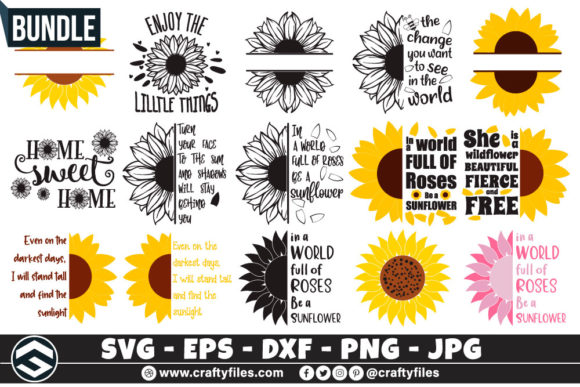
The layout of the bundle creates a cohesive narrative. Unlike some random collections where designs feel disjointed, these sunflowers share a consistent line weight and stylistic approach. Whether you are planning a large-scale applique project or a delicate running stitch detail, the shapes appear robust enough to translate well from screen to fabric. The "bundle" aspect implies variety, which is crucial for creating depth in a finished piece.
For a craft business owner or Etsy seller, the visual appeal is the first step toward customer trust. A clean, well-defined sunflower motif signals professionalism. It suggests that the maker cares about details, a sentiment that translates directly into perceived value. When a customer sees a high-quality embroidered sunflower on a tote bag or a nursery pillow, they immediately associate that clarity with quality craftsmanship. This design has the potential to do exactly that, provided the execution matches the digital promise.
Real-World Application: From Digital File to Finished Product
Let me take you through a scenario I recently considered while prepping for a holiday gift season. Imagine a custom embroidered sweatshirt for a local flower shop owner. The goal was to create something that felt personal yet commercially viable. The Bundle of Sunflower fits this brief perfectly. The bold outlines would work beautifully as a satin stitch border, while the inner details could be filled with a softer fill stitch to mimic the texture of petals.
However, the versatility extends far beyond apparel. Consider a baby item, such as a muslin blanket or a onesie. Sunflowers are a timeless choice for nurseries, but the key is scale and density. If the design is too dense, it might become stiff against a baby's skin. If it is too sparse, it might lose its impact. The vector nature of the files allows for resizing, which is a massive advantage when adapting the design for different products like aprons, kitchen towels, or even small embroidered patches.
I also see this design thriving in the realm of home decor. A pillow cover featuring a cluster of sunflowers from this bundle could serve as a stunning centerpiece for a farmhouse-style living room. The natural theme pairs effortlessly with linen or cotton fabrics, enhancing the tactile experience of the finished product. For commercial embroidery projects, the ability to adapt the design for different hoop sizes means you aren't limited to a single product line. You can expand from a simple cap logo to a full-back jacket design with confidence.
Strategic Considerations: Where Caution is Key
While the design is promising, no digital file is universally perfect without testing. There are specific scenarios where the Bundle of Sunflower requires careful handling. First, consider the hoop size. If you attempt to stitch a highly detailed version of this sunflower in a small 4x4 hoop, you risk losing the finer points of the petals or the center of the flower. Small details often get lost in the stitching process, especially if the stitch density is not optimized for the specific machine being used.
Fabric choice is another critical factor. Embroidering on stretchy fabrics like jersey or thin synthetics can lead to puckering if the stabilizer isn't chosen correctly. The sunflower design, with its potential for larger fill areas, places significant tension on the fabric. Without proper backing, the final product might look warped rather than crisp. Similarly, working with dark fabrics requires a decision on underlay stitches or thread colors to ensure the design pops. A light-colored sunflower on a black background needs a solid foundation to avoid looking muddy or indistinct.
Curved surfaces, such as caps or hats, present their own challenges. While the design looks great flat, transferring those curves onto a rounded brim requires precise digitizing adjustments that may not be inherent in the raw file. If you are using this for a custom hat, you must verify that the curve distortion doesn't squash the flower shape unnaturally. Additionally, for items that require frequent washing, like aprons or tote bags, the durability of the stitch placement is paramount. Dense areas need to be secured properly to prevent fraying over time.
Design Notes for the Professional Maker
Before committing to a production run or a client order, there are several practical steps every designer should take. The most important rule is to test the design on scrap fabric first. This allows you to evaluate the stitch density and thread color contrast in real life. What looks vibrant on a monitor can sometimes appear dull once stitched, depending on the sheen of the thread used.
Reviewing the stitch types is essential. Does the design rely heavily on satin stitches for outlines? If so, ensure the angles are correct to prevent thread breaks. Are there long running stitches that might snag? Checking the stability of the design is vital for maintaining a professional finish. Furthermore, inspect small details closely. Sometimes, intricate lines in a vector file can become illegible blobs after conversion to an embroidery format. Comparing light and dark fabric backgrounds in your mockups can help you anticipate how the design will perform across different product variations.
Stabilizer selection cannot be overstated. For a design with substantial fill areas like a sunflower, a cut-away stabilizer is often necessary to maintain structure, especially on woven fabrics. On knit fabrics, a tear-away might suffice, but only if the design isn't too heavy. Always confirm whether the design works for both personal and commercial projects by reviewing the licensing terms explicitly included in the zip folder. Selling finished items made with this design requires clear rights to ensure your craft business remains compliant.
Final Thoughts on Value and Versatility
The Bundle of Sunflower offers a compelling opportunity for designers, hobbyists, and small shop owners alike. Its strength lies in its adaptability and the strong emotional connection sunflowers evoke with customers. Whether you are creating personalized gifts, boutique branding, or holiday merchandise, this design asset provides a solid foundation for creativity.
By approaching the digitization process with care—testing on scraps, choosing the right stabilizers, and respecting the limitations of different fabrics—you can transform this digital graphic into a tangible masterpiece. It is a reminder that while the file is just the starting point, the skill of the embroiderer brings it to life. For those looking to add a touch of nature and warmth to their handmade products, this bundle is a worthy addition to any library of design assets.
In the world of crafts and graphics, finding a balance between aesthetic appeal and technical feasibility is the hallmark of success. The Bundle of Sunflower hits that mark, offering a versatile tool for anyone ready to stitch their next big idea into reality. Just remember to check your file formats, confirm your machine compatibility, and always prioritize the quality of the finished product above all else.